Industry News
Why Spare Parts Availability Matters More Than Truck Price
Experienced transporters and solo operators alike understand a harsh truth about the logistics industry: the most expensive trucks are those that are "idle" – unable to move because they are waiting for a spare part.
If you want to keep your business alive, you need to understand why having parts nearby matters significantly more than the cheap price you paid to clear it at the port.
1. The Catastrophic Cost of "Chocking" Your Truck
In the African transport business, your revenue is calculated by the trip. A truck only makes money when its wheels are turning on the bitumen or the dirt.
When your truck breaks down on a major corridor—like the Northern Corridor from Mombasa, the transit route through Burkina Faso, or the mining roads of Zambia—the purchase price becomes completely irrelevant. What matters is getting back on the road.
The True Cost of a Corridor Breakdown
- Scenario A: The "Exotic" European Import
- Upfront Cost: You saved $5,000 buying a rare European model.
- The Breakdown: A specialized electronic sensor fails on the road.
- The Headache: Local shops don't have it. It must be ordered from overseas. Customs takes time. Your truck is "chocked" for 3 weeks.
- Financial Loss: 21 days of lost cargo trips equals over $6,000 in lost revenue.
- Net Result: Your cheap upfront price becomes an expensive lesson.
- Scenario B: The Popular "King of the Road" (e.g., HOWO)
- Upfront Cost: You paid the standard market rate.
- The Breakdown: A mechanical fuel injector fails mid-journey.
- The Solution: Your driver hitches a ride to the nearest town. Every local spare-parts "container shop" has it. Fixed in 2 hours.
- Financial Loss: Half a day of delay. Your cargo arrives on time.
- Net Result: The truck stays a cash-generating workhorse.
2. Roadside Mechanics vs. Diagnostic Laptops
Modern trucks built for overseas markets are packed with complex electronics, computers, and delicate emission sensors.
If one of these sensors fails in a rural area or a remote mining site, you are in trouble. You cannot fix it with a spanner. You need an expensive diagnostic laptop, specialized software, and a "bonga" technician just to clear the error code so the engine will start.
Popular Chinese trucks—especially models running the classic Euro II or Euro III mechanical engines (like the Weichai WD615)—avoid this completely. They have a massive, established ecosystem across the continent. Because their layout is purely mechanical, almost any local "kanyama" (roadside mechanic) from Accra to Nairobi already knows these engines inside out and can fix them with basic hand tools.
3. The Power of the Local "Spare Parts Market"
A truck brand might have a glorious reputation for engineering excellence in Germany or Japan, but if their supply chain doesn't reach your local market, that reputation cannot pull your load out of the mud.
Brands like Sinotruk HOWO dominate African roads because they didn't just sell trucks; they flooded the local markets with parts. Today, you can walk into any major spare-parts hub—like Kirinyaga Road in Nairobi, Ladipo in Lagos, or the bustling mechanics' quarters in Lusaka—and find exactly what you need on the counter:
- Filters, belts, brake shoes, and clutch plates are sold everywhere.
- Affordable OEM components alongside cheap, reliable aftermarket choices.
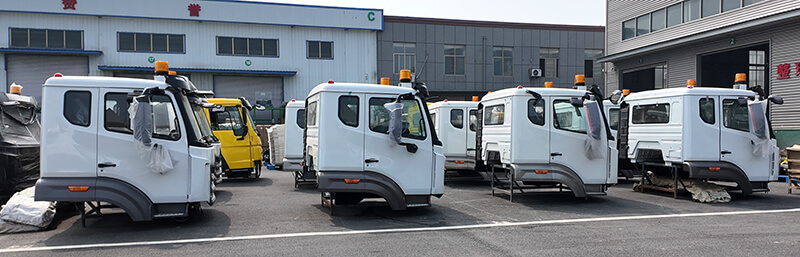
- Complete cabin shells, gearboxes, and replacement axles ready to be loaded onto a pickup.
This means you never have to wait for international shipping, pay crazy express freight fees, or watch your business dry up while your truck sits idle.
When buying your next truck, change your mindset. Don’t just ask, "Who is giving me the lowest price today?"
Instead, ask yourself: "If this truck breaks down in a village 12 months from now, can my driver find a replacement part within an hour, and can a local mechanic fix it by sunset?"
If the answer is no, the truck is a bad investment—no matter how cheap the price tag is. Invest in the brands that have the parts, the local familiarity, and the mechanical simplicity to keep your wheels turning and your cash flowing.
Categories
Latest News
Contact Us
Contact: Snailtruck
Email: snailtruck@snailtruck.com
Phone/Whatsapp: +86 18705477225
Add: NO.168 Quanpu Town, Liangshan County, Jining City, Shandong Province, China
 snailtruck