Industry News
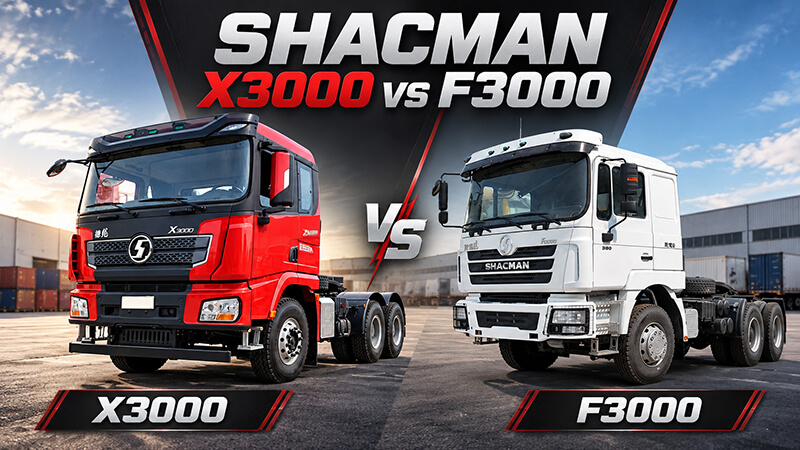
Shacman-x3000-vs-f3000-comparison
"Should I buy the X3000 or the F3000?" — this is one of the most common questions from anyone shopping for a Shacman truck. Both are core export models, but they sit at different price points and are built around different priorities. Getting this choice wrong isn't just a matter of overspending — it can mean paying for features you'll never use, or going cheap on a truck that can't handle your actual working conditions.
This article skips the spec-sheet dump and instead starts from your actual operating scenario, so you can figure out which model genuinely fits your job.
1. The Core Difference in Positioning
Let's start with the bottom line: the X3000 and F3000 aren't a "high-end version" and a "budget version" of the same truck — they're two separate product lines built for different use cases.
Shacman X3000: Positioned for long-distance, highway-focused transport. Its core selling points are fuel efficiency, driver comfort, and highway reliability. It suits long-haul line-haul logistics and operations where driver experience genuinely matters.
Shacman F3000: Positioned around durability and simplicity, with a more streamlined spec sheet and a stronger price advantage. It suits cost-sensitive, short-to-medium-distance operations that don't require heavy "smart" or high-tech features.
Once you understand this difference in positioning, everything else about the decision gets a lot clearer.
2. Key Comparison Points
1. Best-Fit Use Case
- X3000: Better suited to long-distance, highway-dominant line-haul transport — cross-province or cross-border freight, for example
- F3000: Better suited to short-to-medium-distance transport, especially operations that are highly cost-sensitive and don't involve long stretches of highway driving
2. Price and Budget
- The F3000 sits at a noticeably lower price point, making it the more attractive option for buyers with tighter budgets who just need something that gets the job done
- The X3000 costs more, but that premium buys a more complete feature set and a better driving experience — a straightforward case of "you get what you pay for"
3. Specification and Technology Level
- The X3000 offers a noticeably richer set of smart systems, safety features, and comfort equipment — it's one of the more technologically advanced models in Shacman's export lineup
- The F3000 has a more streamlined spec sheet with fewer tech highlights, leaning instead into "tough, simple, easy to maintain" — which is exactly why it remains popular in harsh working conditions
4. Cab and Driver Experience
- The X3000's cab is designed with long-haul comfort in mind — a real factor when driver experience directly affects operational efficiency on long routes
- The F3000's interior is simpler and more function-oriented, without chasing a "premium feel" — its strength is being tough and dependable rather than comfortable
5. Ideal Buyer Profile
- The X3000 suits long-haul logistics operators and fleets where driver retention and driving experience genuinely matter
- The F3000 suits budget-conscious operators who need reliability without high-tech features, running short-to-medium-distance operations
3. Quick Comparison Table
|
Comparison Point |
Shacman X3000 |
Shacman F3000 |
|
Core Positioning |
Long-distance, highway transport |
Durable, simple, cost-first |
|
Ideal Distance |
Primarily long-haul |
Primarily short-to-medium haul |
|
Price Level |
Relatively higher |
Relatively more affordable |
|
Spec / Tech Level |
Richer, more advanced smart systems |
More streamlined, practicality-focused |
|
Driving Comfort |
Better suited to long hours on the road |
Meets basic needs, function-oriented |
|
Typical Use Case |
Cross-province / cross-border line-haul |
Construction sites, short-haul, cost-sensitive transport |
4. A Common Mistake: "Picking the Middle Option Feels Safer"
When buyers are unsure, they often instinctively gravitate toward "picking something in the middle price and spec range feels safer." But real-world operating data suggests this compromise actually tends to backfire:
- If your actual operating conditions are demanding (frequent short-haul heavy loads, rough terrain) but you chose an under-specified option, you'll see faster wear, higher failure rates, and ultimately higher maintenance costs
- If your actual operating conditions are light but you chose an over-specified, premium option, you end up with wasted fuel and higher upfront cost, without a corresponding return in performance
The key to choosing correctly isn't "picking the middle" — it's understanding your real operating scenario first, then matching the model to it. That's exactly why we recommend starting with "use case" before looking at price and spec.
5. Final Verdict: So Which One Should You Choose?
Here's the decision logic in short:
- If your business is primarily long-haul line-haul transport, where driver experience and long-distance reliability directly impact your operational efficiency, prioritize the X3000
- If your business is primarily short-to-medium-distance or construction site transport, with a tighter budget and a stronger focus on "gets the job done, easy to maintain, good value," prioritize the F3000
In mining and other high-intensity operations, choosing the wrong model doesn't just mean a slightly worse experience — it means faster wear, less stable performance, and a higher total cost of ownership over time. Before placing an order, weigh your actual transport distance, road conditions, and budget together, rather than deciding on price or spec alone.
Still deciding between the X3000 and F3000? Contact us and tell us about your actual operating scenario — transport distance, road conditions, load requirements, and budget range — and we'll help you narrow down the right model for your job.
Categories
Latest News
Contact Us
Contact: Snailtruck
Email: snailtruck@snailtruck.com
Phone/Whatsapp: +86 18705477225
Add: NO.168 Quanpu Town, Liangshan County, Jining City, Shandong Province, China
 snailtruck